WarsawOld Town
Discover the history of the rebuilt city and plan a tailor-made Warsaw visit with VisitPoland
Suggested stay
Region
Trip style
Warsaw Old Town & Castle Square Guide | VisitPoland
Warsaw Old Town is best explored on foot, with time to look beyond its best-known views. Begin at Castle Square, then follow the streets towards the cathedral, the Old Town Market Square and the Barbican. Along the way, colorful townhouses, decorative doorways and small squares reveal a different scale of the city, more intimate than the broad avenues of modern Warsaw.
What makes this neighborhood remarkable is not only its appearance, but the story behind it. These streets connect medieval Warsaw, royal ambition and the extraordinary effort to rebuild a city after the Second World War.
A historic center with an extraordinary story
Known in Polish as Stare Miasto, the Old Town has medieval origins. Its streets developed around a market square, churches and the residence of the Dukes of Mazovia, which later became the Royal Castle. This was a place of trade and everyday life as well as a setting for royal and political history.
Much of what you see today was reconstructed after the devastation of the Second World War, particularly the destruction of 1944. Architects, conservators and craftspeople used historical records, architectural surveys and surviving building fragments to recreate the historic center. The result was not simply a collection of restored monuments, but the recovery of an entire urban neighborhood.
In 1980, the Historic Centre of Warsaw was inscribed on the UNESCO World Heritage List. Its significance lies not only in its historic appearance, but also in the exceptional achievement of reconstruction. Understanding this changes the experience of walking here: the streets tell a story both about earlier Warsaw and about the determination to rebuild it.
St. John’s Archcathedral and the bell at Kanonia
Follow Świętojańska Street to St. John’s Archcathedral, a church closely connected with Poland’s public and spiritual life. Royal coronations took place here, including that of the last Polish king, Stanisław August Poniatowski. The cathedral was rebuilt after the war, with a facade inspired by Mazovian Gothic architecture rather than a direct recreation of its pre-war appearance.
Behind the cathedral, Kanonia opens into a small triangular space with a bronze bell. Local legend associates the bell with wishes and good fortune. Whether or not you follow the tradition, this is a rewarding place to pause: the enclosed space and surrounding facades offer a quieter architectural contrast to Castle Square.
Side streets and a view towards the Vistula
Leave room in your route for Piwna, Wąski Dunaj and Szeroki Dunaj. These smaller streets reward a slower pace and attention to details such as doorways, signs and facade decorations. They also help you experience the Old Town as a network of connected spaces rather than a sequence of major monuments.
For a different perspective, head towards the river-facing edge of the neighborhood and the viewpoint at Gnojna Góra. The name recalls the site’s former use as a municipal refuse heap, an unexpected piece of everyday history behind today’s view over the Vistula. From here, the setting of the Old Town above the river becomes much easier to appreciate.
Castle Square and Sigismund’s Column
Castle Square, or Plac Zamkowy, makes a natural starting point. Above the square stands Sigismund’s Column, erected in 1644 in honor of King Sigismund III Vasa. His decision to establish the royal residence in Warsaw helped transform the city into the political center of the Polish-Lithuanian Commonwealth.
Pause here before entering the narrower streets. The open square brings together the Royal Castle, the rooftops of the Old Town and the approach from Krakowskie Przedmieście. It is a useful place to understand how the historic neighborhood connects with the Royal Route.
The Royal Castle deserves a separate visit for its interiors and collections. Once a royal residence and a meeting place for parliament, it was the setting for the adoption of the Constitution of 3 May 1791. For this walk, begin with its exterior and the surrounding square, leaving enough time for the streets beyond.
The Old Town Market Square and Warsaw’s Mermaid
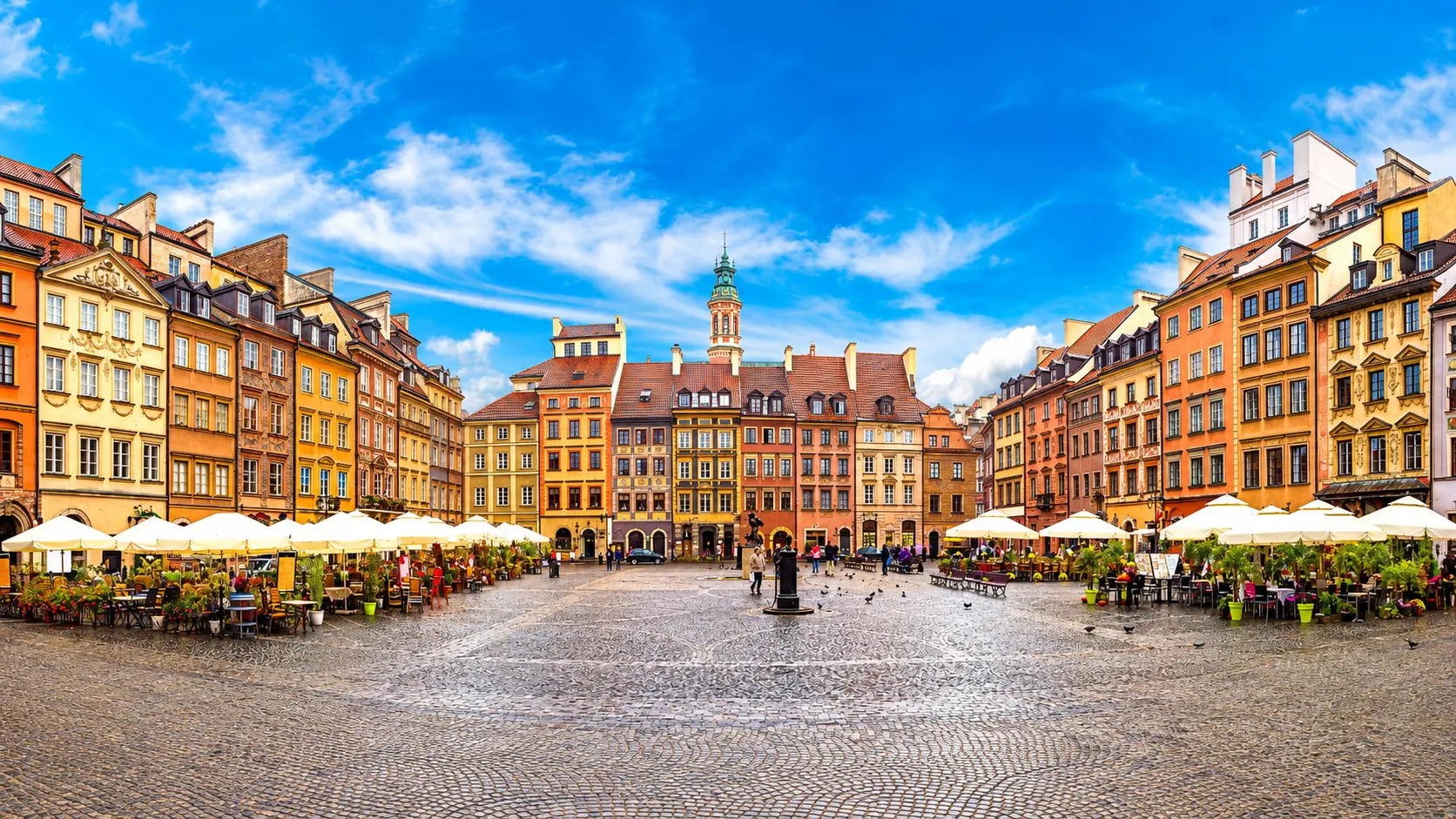
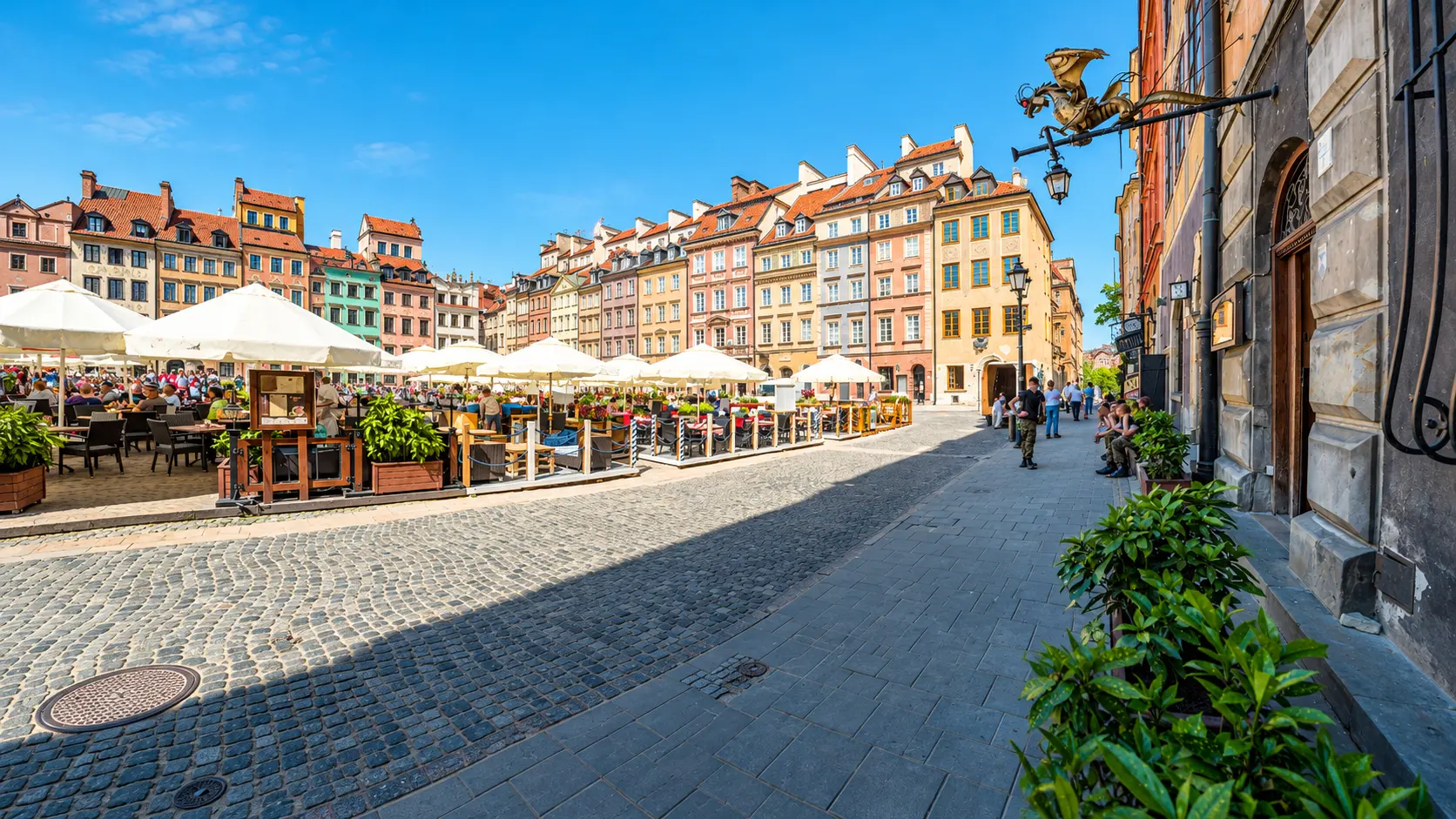
The Old Town Market Square, Rynek Starego Miasta, was laid out around the turn of the thirteenth and fourteenth centuries. It became a center of commerce and civic life, where markets and public gatherings brought the town together. Today, its four sides form one of Warsaw’s most recognizable views.
Look above the ground-floor restaurants and cafes. The facades differ in color, ornament and proportion, giving each part of the square its own character. Rather than crossing straight through, walk around the edges and look back from the corners to appreciate the space from different angles.
At the center stands the Warsaw Mermaid, or Syrenka, the city’s emblem and legendary protector. The sculpture in the square is a replica; the historic original is preserved in the Museum of Warsaw. It is a fitting symbol for a neighborhood where original objects and reconstructed surroundings exist side by side.
The Museum of Warsaw occupies eleven historic townhouses on the square. Its displays use works of art and everyday objects to tell the stories of the city and its inhabitants. Choose it for a closer look at Warsaw beyond royal history, and allow additional time rather than treating it as a brief stop between photographs.
The Barbican and the old city walls
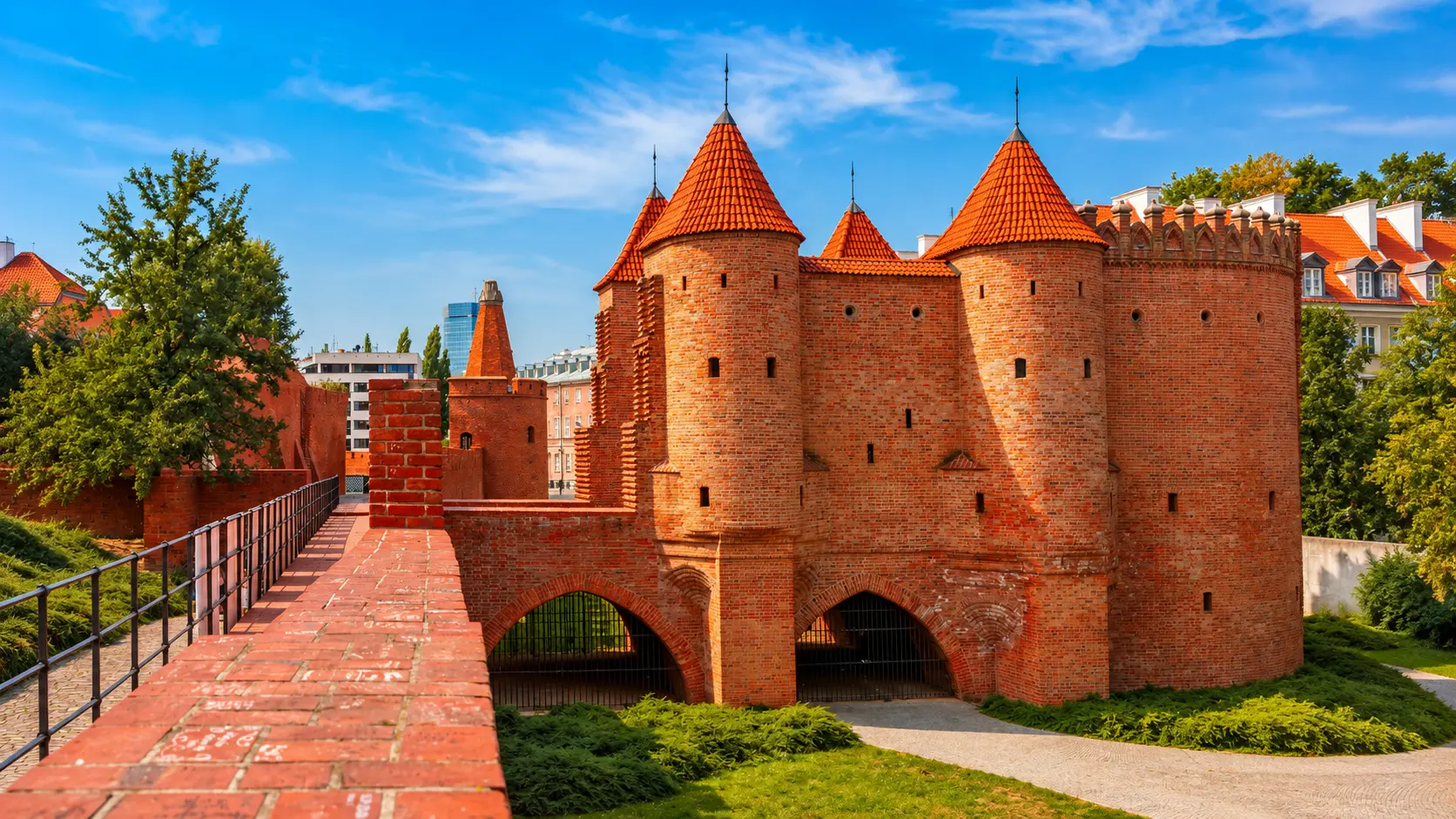
At the northern edge of the Old Town, the Barbican marks the approach towards the New Town. Built in 1548, it was a Renaissance addition to Warsaw’s older defensive system, protecting the entrance through the New Town Gate. Its brickwork, towers and position beside the former moat help explain how compact the fortified town once was.
The Barbican and surrounding walls combine surviving historic elements with reconstruction. Walk beside them to see the neighborhood from outside its former boundary. From here, you can continue towards Freta Street and the New Town, or follow the walls beside Podwale back towards Castle Square
Planning your Old Town walk
For a first visit, we suggest allowing around two to three hours for an unhurried outdoor walk with stops for photographs and a break. Add more time for the Royal Castle, the Museum of Warsaw or other interiors. This is a suggested pace, not a fixed tour duration.
Wear comfortable shoes and take uneven paving and steps into account when planning your route. Church visits should fit around services, and museum opening arrangements should be checked for your travel dates. Share any mobility requirements when arranging a guided visit so that the route can be planned accordingly.
The Old Town can be the starting point for a longer day in Warsaw, but it also deserves time on its own. A walk that includes the major squares, a few quieter streets and a pause overlooking the river offers a fuller introduction than a quick circuit of the most photographed landmarks.
YOUR WARSAW VISIT
See Warsaw your way
From an Old Town walk to a longer stay in the capital, tell us what you would like to experience. Share your dates, group size and interests, and we will help shape a visit around you.