Kraków
Kraków’s appeal is not confined to the beauty of its Main Market Square.
Royal ceremony, university life, Jewish history, twentieth-century upheaval and contemporary creativity coexist within a remarkably varied city. A morning on Wawel Hill, an afternoon in Kazimierz and a museum visit in Podgórze tell different stories. Explore them together and Kraków becomes more than an elegant stop on a tour of Poland. It becomes a place worth staying in.Suggested stay
Region
Trip style
Explore this page
Have any other questions?
Need more information before planning your visit to Cracow? Get in touch with us to discuss your ideas, ask a question or explore options for your trip.
A royal city with a living cultural identity
For centuries, Kraków was a center of Polish royal power, religious life and scholarship. Wawel Hill expresses that political and ceremonial importance, while the Old Town’s street pattern reflects the planned medieval city. The Main Market Square, merchants’ houses, churches and university buildings show how commerce, learning and faith developed alongside the court.
The royal court’s move to Warsaw did not erase Kraków’s symbolic importance. Coronations, royal burials, artistic patronage and the memory of independence continued to shape its identity. Under the partitions of Poland, the city became part of a different political landscape, eventually developing as a major cultural center within Austrian-ruled Galicia. Its nineteenth-century art and institutions are essential to understanding why Kraków meant so much to generations of Polish writers and artists.
Kazimierz was once a separate town. Its Jewish and Christian histories should not be reduced to one picturesque quarter. Across the Vistula, Podgórze introduces another urban story, including the history of the wartime ghetto and German occupation. Nowa Huta, farther east, reveals the ambitions and contradictions of postwar industrial planning.
UNESCO’s historic-center designation encompasses more than the Main Square. It brings together the Old Town, Wawel and the historic areas of Kazimierz and Stradom. A thoughtful stay moves between these layers rather than assuming that one walk around the square represents the whole city.
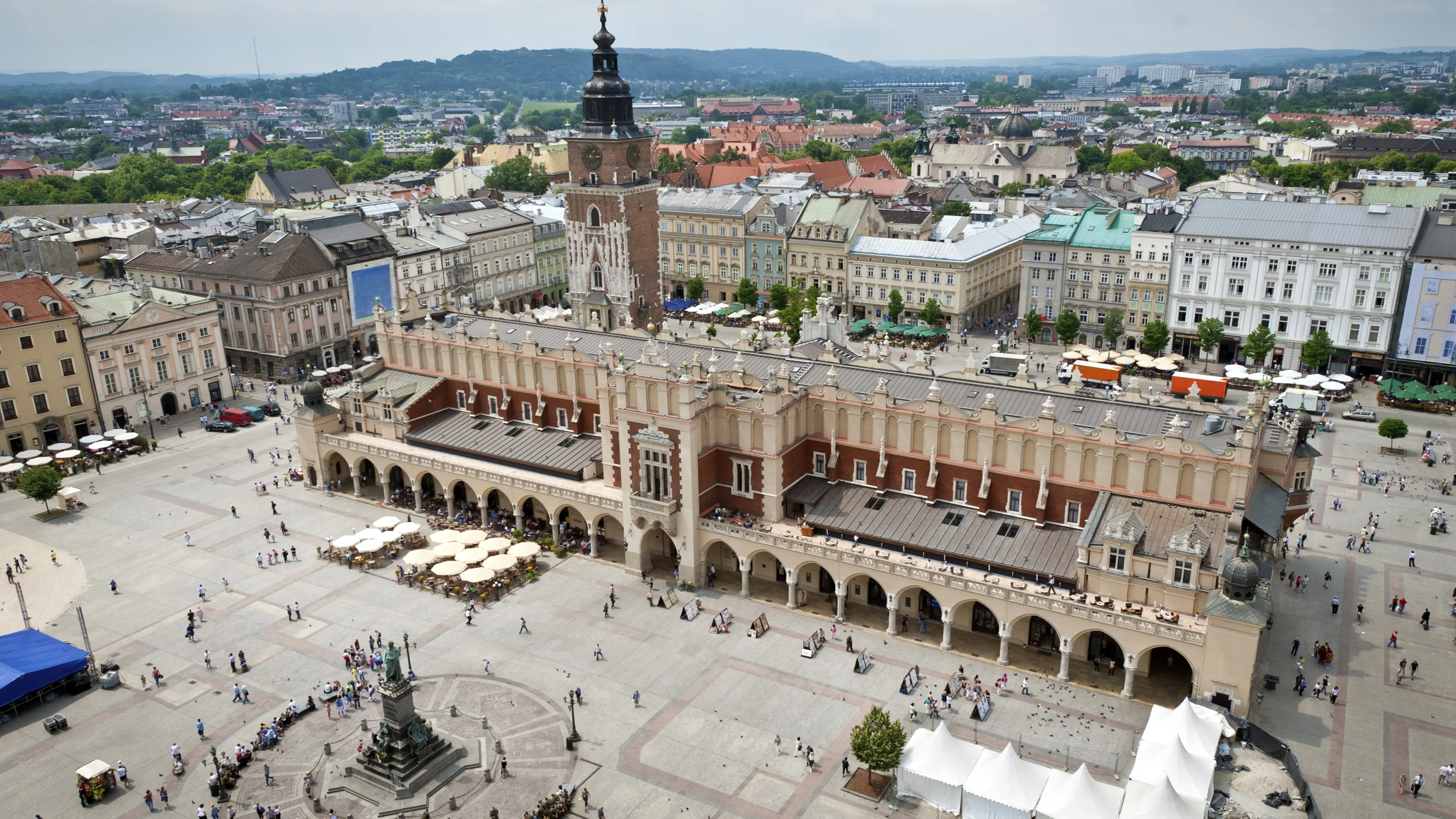
Landmarks that explain the city
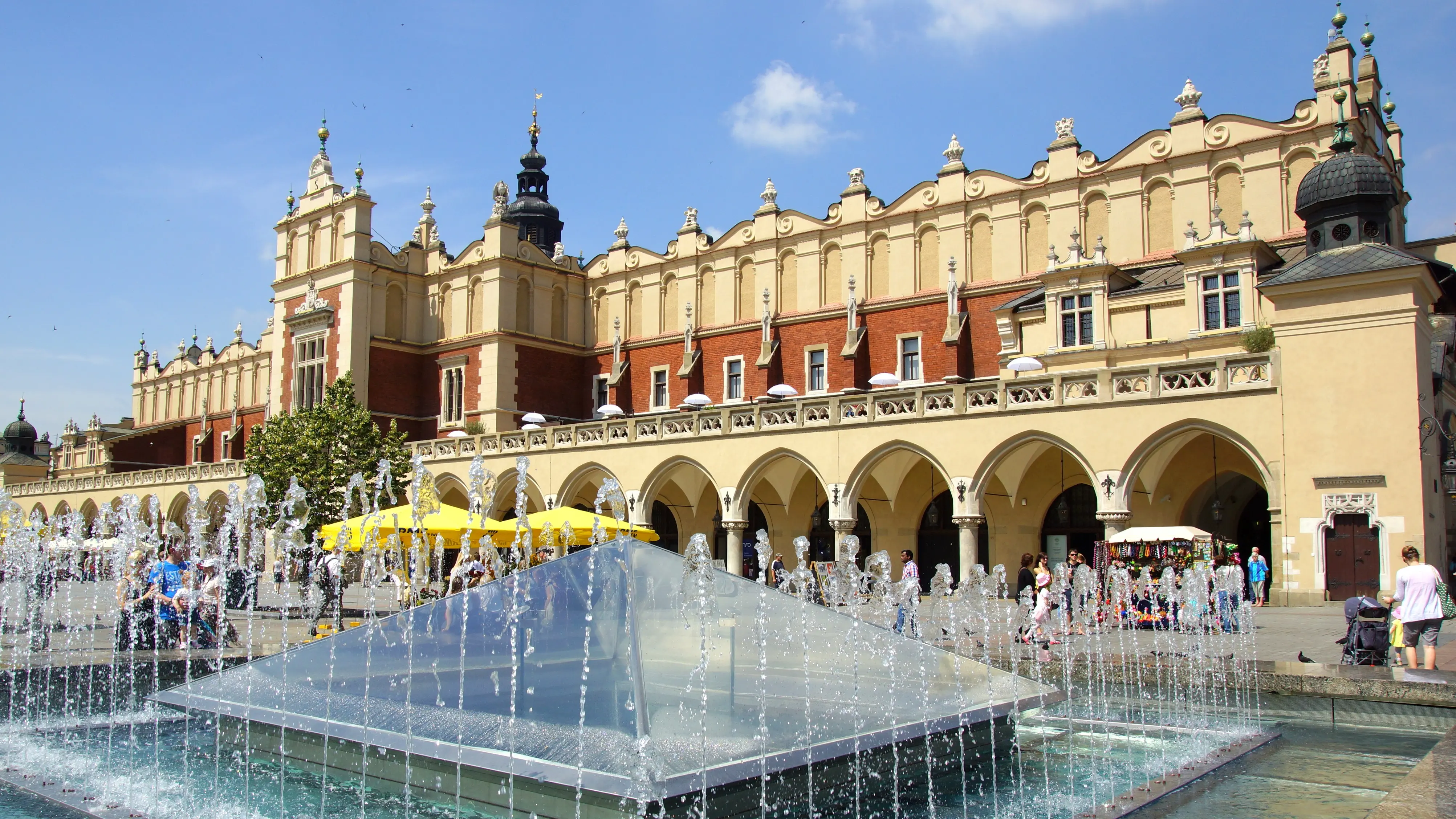
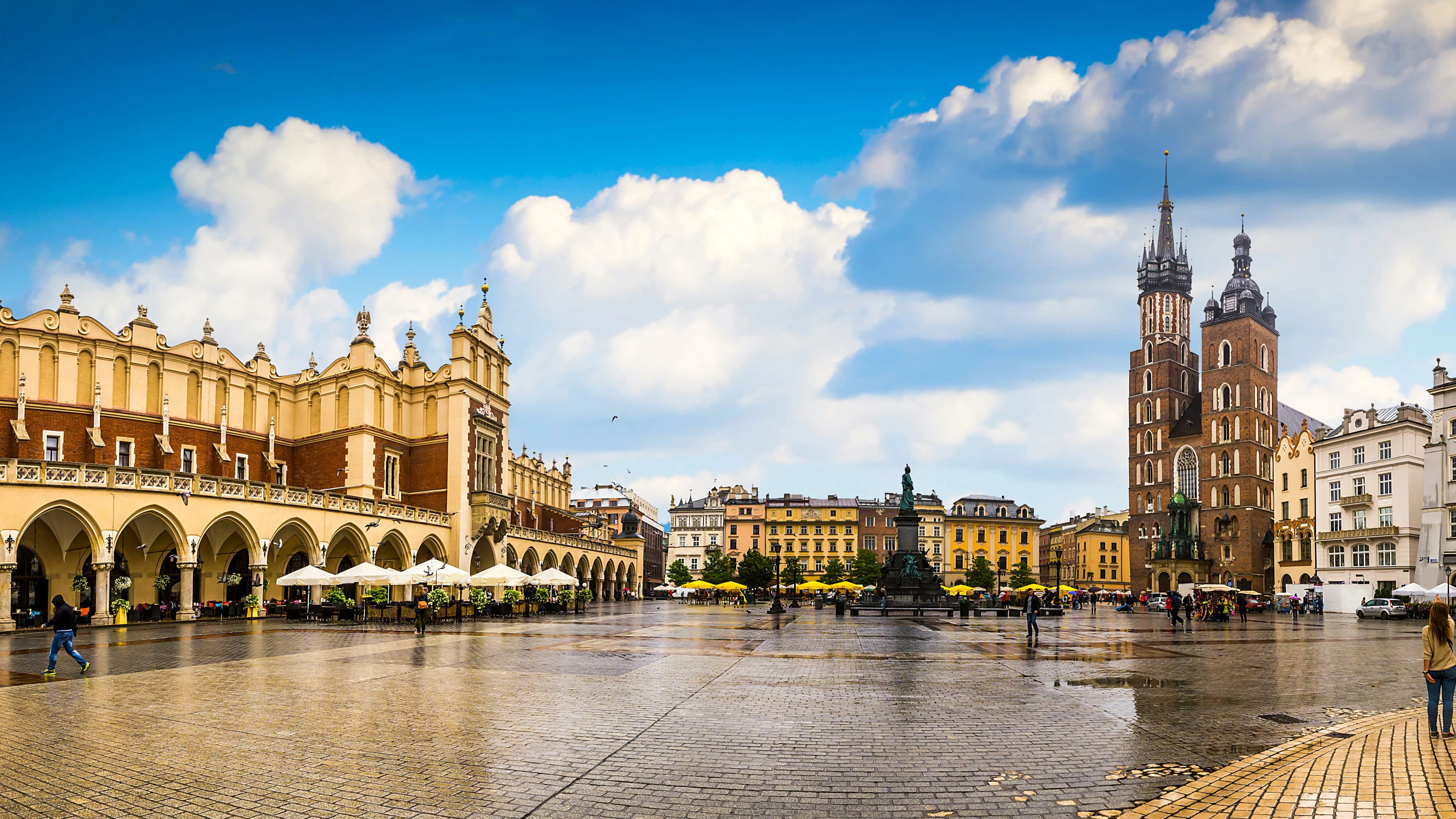
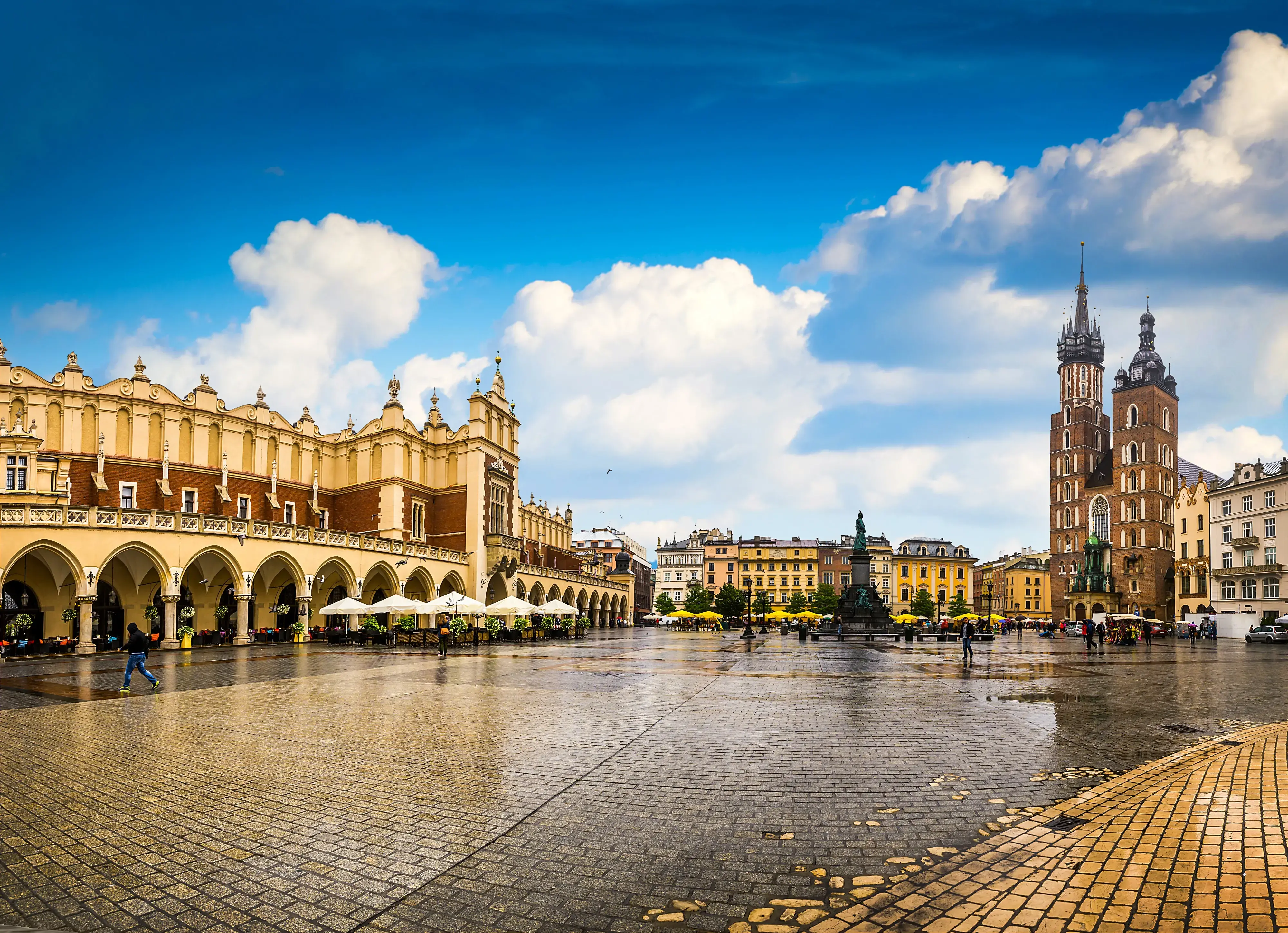
Main Market Square and the Cloth Hall
The Main Market Square is an unusually spacious medieval urban setting, but its interest lies in the details as much as its size. The Cloth Hall recalls Kraków’s trading connections; surrounding townhouses reveal the long life of a prosperous city. Look above shopfront level to see changing facades, architectural details and the relationship between public space and private wealth.
Treat the square as an orientation point, then return at another time of day. The upper gallery in the Cloth Hall and the underground museum offer very different ways of going deeper. A pause at a café is also part of experiencing the square as a living meeting place rather than an outdoor museum.
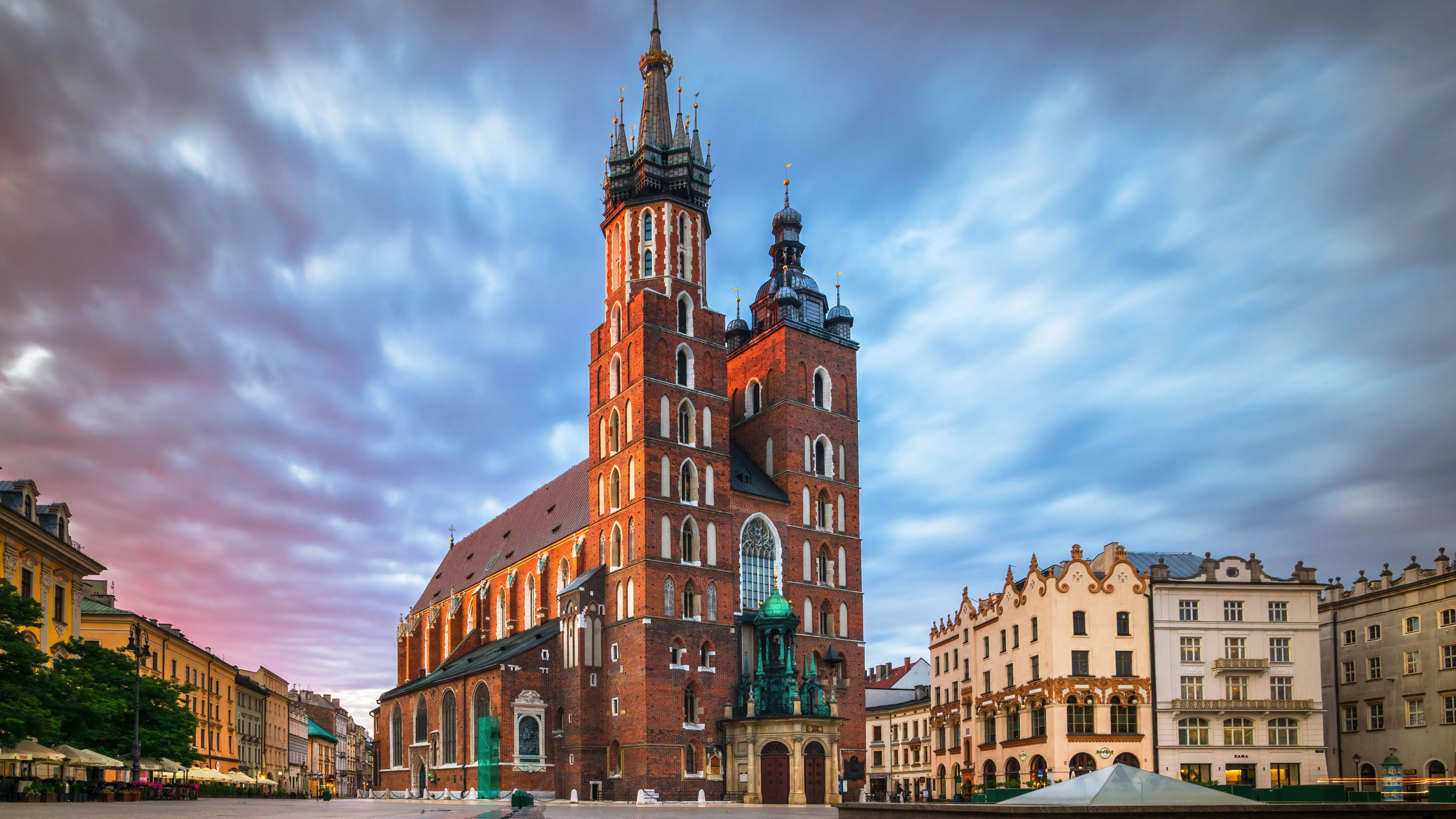
St. Mary’s Basilica
St. Mary’s Basilica is both a major landmark and an active church. Its two unequal towers shape the skyline, while the interior contains the celebrated late-medieval altarpiece by Veit Stoss, known in Poland as Wit Stwosz. The color, scale and craftsmanship repay attention beyond a quick photograph.
The trumpet call is part of the city’s soundscape. Traditions surrounding it can be introduced as traditions, without presenting every legend as established history. Tourist visits, worship and any tower access follow separate arrangements. Pair the basilica with a walk through the surrounding streets to connect religious art with the commercial city that supported it.
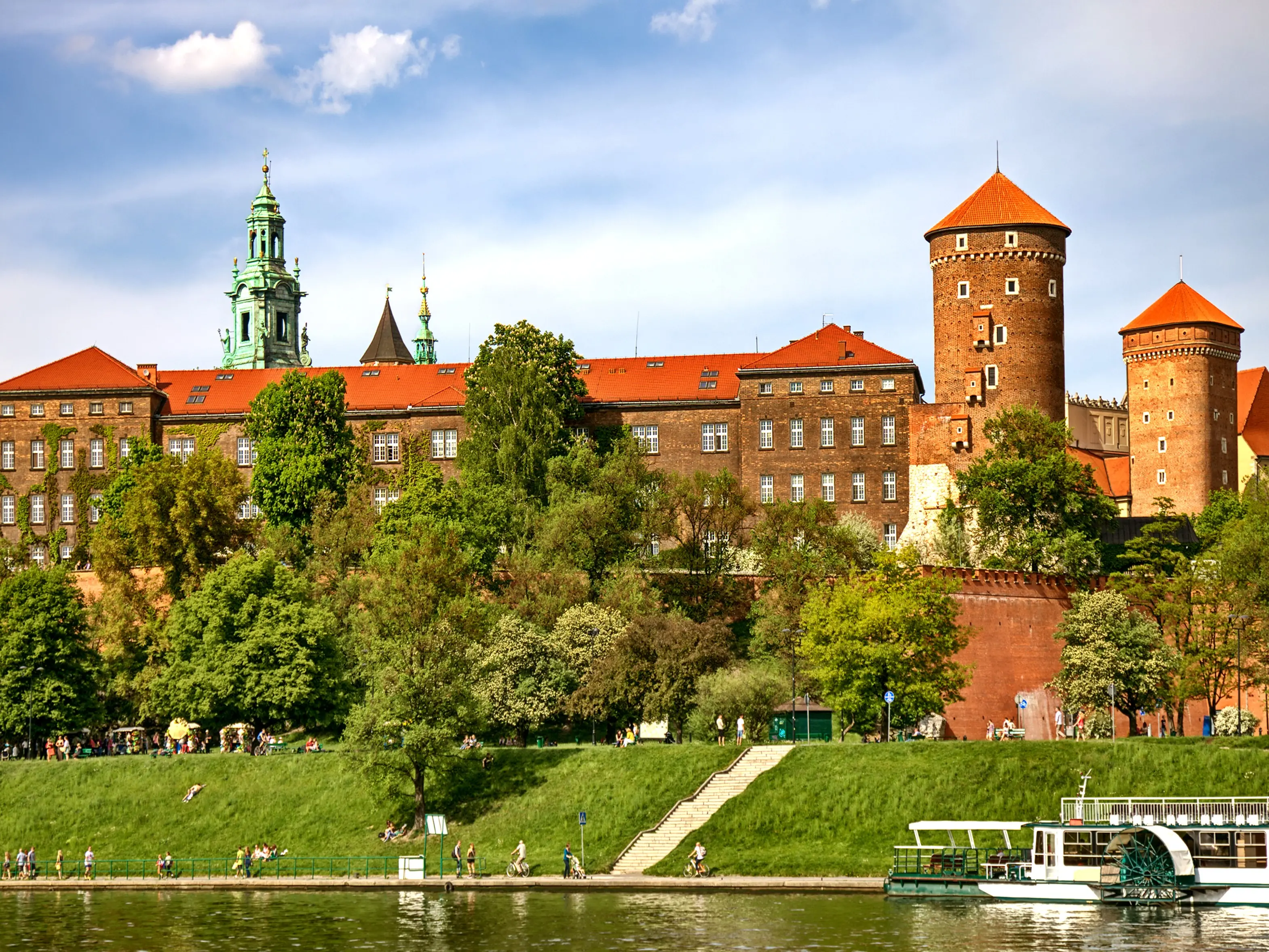
Wawel Royal Castle
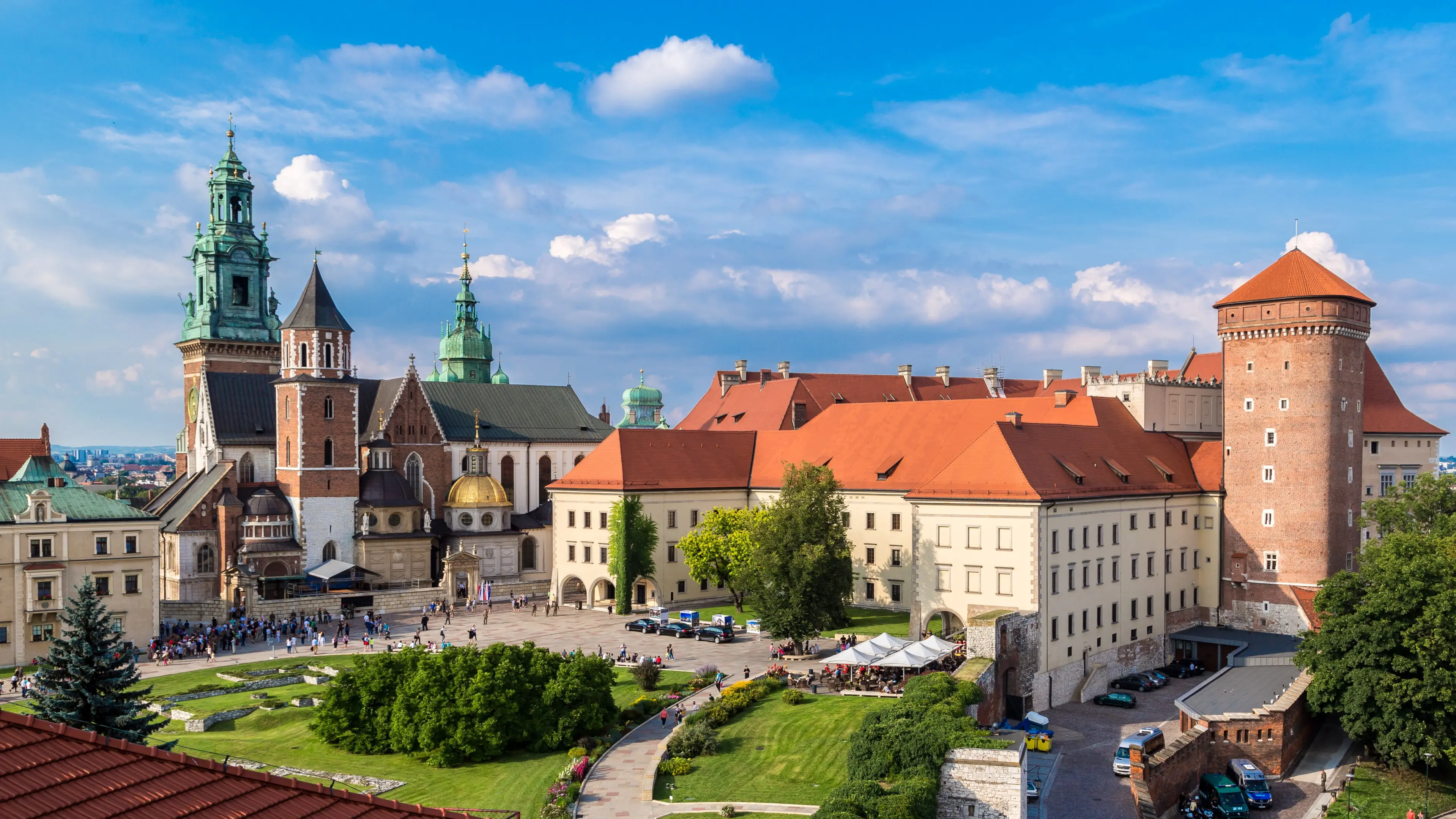
Wawel is not a single room or ticket. The hill brings together the royal castle, cathedral, courtyards and a layered landscape of political authority. Renaissance architecture and major collections reveal the ambitions of the Jagiellonian court and later chapters of Polish history.
Choose the visit by interest: ceremonial interiors, collections or the wider setting. Trying to add every exhibition can crowd out the experience of the hill itself. The castle’s changing displays are one reason to build flexibility into the program. Views toward the Vistula provide an outdoor counterpoint, while the route into the Old Town makes the connection between royal residence and civic center clear.
Wawel Cathedral
The cathedral’s role in coronations, royal burials and national remembrance makes it central to Kraków’s meaning. Chapels and monuments belong to different periods, so the building rewards a guided explanation rather than a rapid circuit. The Sigismund Chapel is especially significant for Renaissance architecture in Poland.
Church visits require respect for worship and the current visitor route. Additional areas such as towers or crypts may involve separate access and stairs. The cathedral and castle complement one another, but they are distinct institutions. For travelers with limited time, a well-chosen visit to each is more useful than assuming that admission to one covers the whole hill.
Florian Gate, the Barbican and Planty
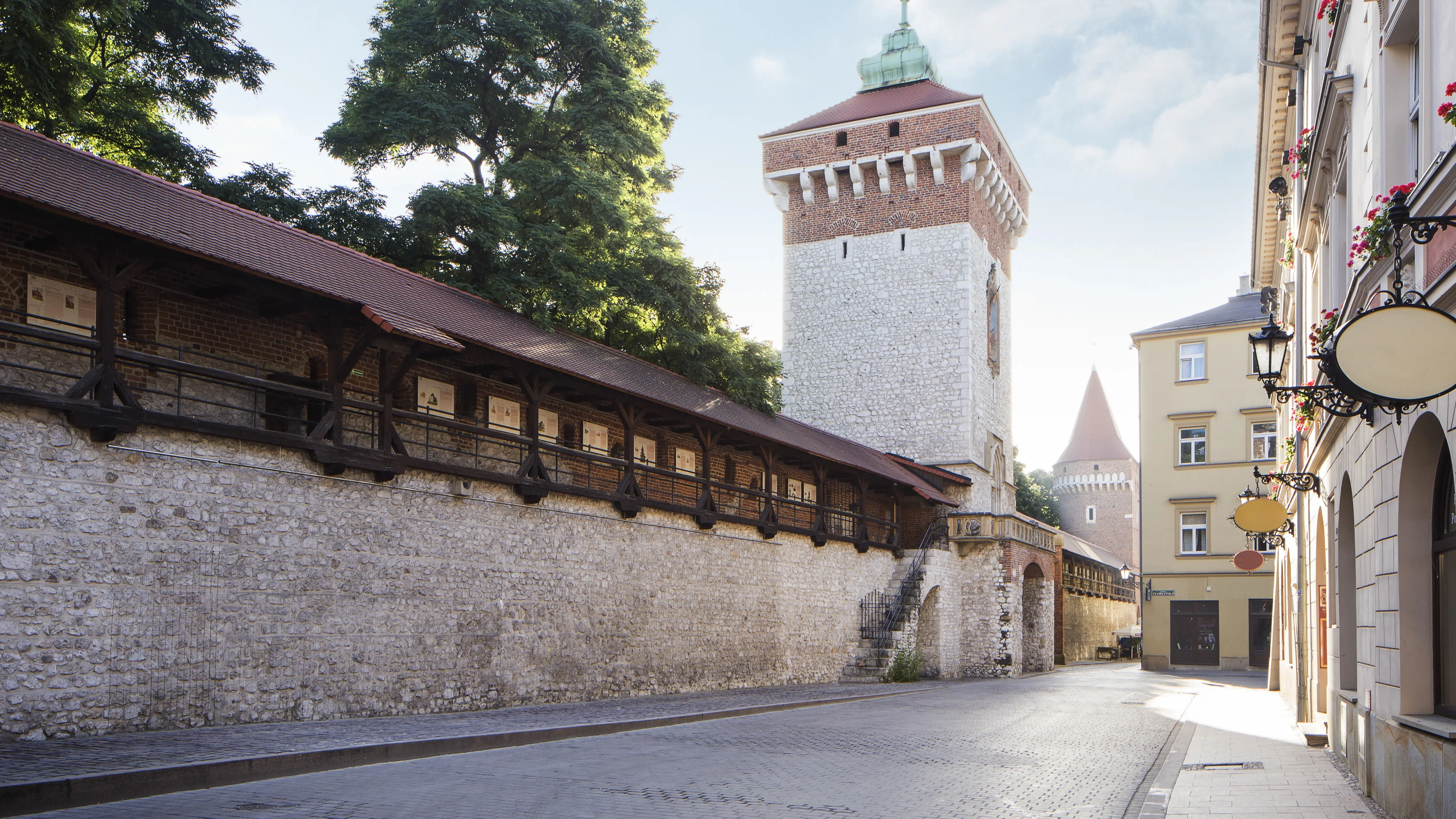
Kraków’s former defenses help explain the shape of the Old Town. Florian Gate and the Barbican preserve a sense of arrival, while the Planty gardens trace much of the space once occupied by fortifications. They create a green frame around the dense historic streets.
This is an excellent way to introduce the city’s geography before exploring its interiors. The path from the northern defenses toward the Main Square follows a memorable sequence of gateways, streets and open space. The gardens also provide breathing room between museum visits. They are not a substitute for the sights inside the city, but a useful way to understand how those sights connect.
Collegium Maius and the university quarter
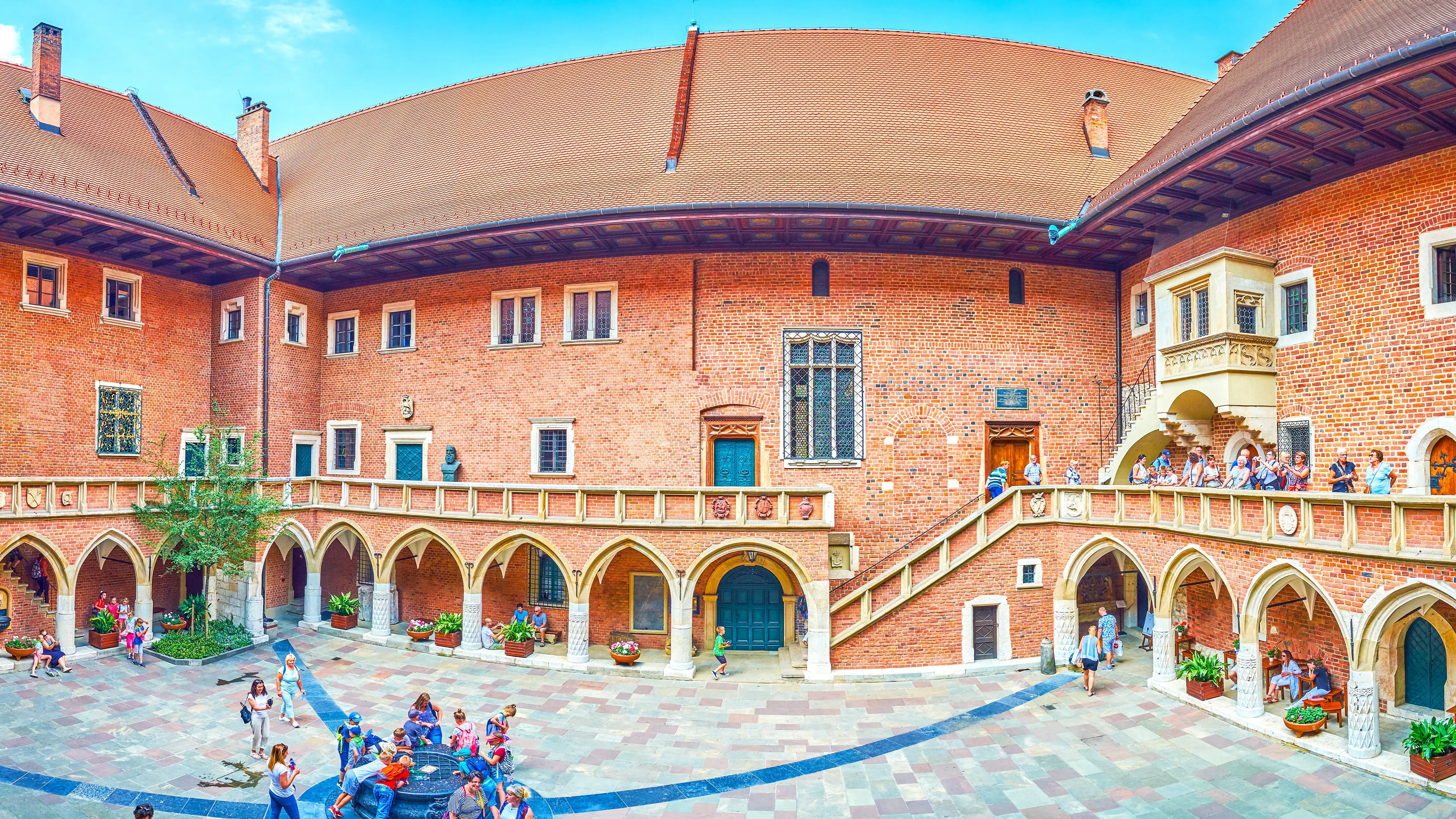
The Jagiellonian University gives Kraków a history of scholarship that reaches far beyond its royal image. Collegium Maius, with its arcaded courtyard, is the most recognizable historic setting for that story. The university museum connects academic life with scientific instruments, collections and the development of learning.
A visit should distinguish the accessible courtyard from the museum’s current interior route. Restoration work can affect rooms and accessibility, so the program must follow the institution’s current guidance. The surrounding university quarter is worth exploring even when particular rooms are unavailable. It adds an intellectual dimension to the Old Town rather than another decorative courtyard alone.
Museums and collections worth choosing deliberately
Princes Czartoryski Museum
The Princes Czartoryski collection makes Kraków a significant stop for travelers interested in European art. Leonardo da Vinci’s Lady with an Ermine is the best-known work, but the wider collection explains the cultural purpose of collecting, preserving and presenting art across difficult periods of Polish history.
Give the visit more than the time needed to see one painting. The museum can form the center of an art-focused morning, followed by the university quarter or another National Museum branch. Availability of particular works and exhibition routes should always be confirmed for the visit rather than treated as an unconditional promise.
The Cloth Hall gallery
Above the commercial ground floor, the Gallery of Nineteenth-Century Polish Art in the Cloth Hall introduces images that helped shape national imagination. History painting, landscape and representations of rural life reveal how artists responded to questions of identity when Poland’s political circumstances were changing.
This is an especially useful complement to a guided walk. Places, traditions and historical references encountered in the city become visible through an artistic lens. Rather than racing through every room, choose a few works that connect with the rest of the journey. The location also makes it easy to combine with the square without another cross-city transfer.
Rynek Underground
Beneath the Main Market Square, Rynek Underground turns attention toward archaeology, trade and the material traces of the medieval city. It offers a useful contrast with the facades above: the visitor encounters layers and fragments rather than a finished architectural view.
The experience works best when introduced by a walk around the square first. What might otherwise seem like isolated excavated remains can then be related to a recognizable place. Admission needs planning, particularly for groups. It is a strong choice for travelers interested in urban history, but it does not replace the art collections or the royal story at Wawel.
Oskar Schindler’s Enamel Factory
The museum in Schindler’s former factory presents Kraków under German occupation from 1939 to 1945. It is not simply a biography of Schindler or a recreation of a film. The exhibition explores the wider occupied city and the experiences of its inhabitants.
Located in Zabłocie, it belongs naturally in a Podgórze itinerary. Give the narrative time and consider the emotional weight of the material when planning the rest of the day. A heritage visit can connect the museum with the former ghetto area, but should not turn difficult history into a rapid sequence of photo stops. Reservations are particularly important for organized groups.
Galicia Jewish Museum
The Galicia Jewish Museum offers another perspective on Jewish heritage, including the traces of Jewish life and the ways that history is remembered. Its exhibitions and cultural activity complement, rather than duplicate, visits to synagogues and wartime memorials.
This can be an important place to slow down and reflect during a Kazimierz day. The surrounding district contains historical buildings, active institutions, contemporary businesses and tourist interpretations that need distinguishing from one another. An exhibition-led visit helps introduce those questions. Check the current program and choose the material that best fits the interests of the travelers.
Contemporary art and the National Museum
Kraków is not only a city of old masters. The National Museum’s wider branches, exhibitions devoted to artists such as Stanisław Wyspiański, and contemporary cultural spaces create alternatives to a purely royal itinerary. MOCAK in Zabłocie places contemporary art near the former factory landscape and the Schindler museum, though the two institutions offer very different experiences.
The best combination depends on the exhibitions running during the stay. A day devoted to art should have its own rhythm, not be assembled from whatever happens to remain after monument visits. Design, applied art and modern Polish painting can provide a particularly revealing bridge between the nineteenth-century city and its present.
Districts beyond the first postcard
Kazimierz
Kazimierz deserves time for both its Jewish heritage and its wider urban history. Szeroka Street, synagogues, courtyards and cultural institutions form only part of a district that also includes major Christian churches and layers of everyday life. It should not be described simply as a preserved prewar neighborhood.
Select interiors in advance and respect worship, cemeteries and community rules. A good walk distinguishes historical evidence from later reconstructions and commercial representations. Leave time for a meal or exhibition, but avoid presenting a themed restaurant as a substitute for learning about the people who lived here or the communities active today.
Podgórze and Zabłocie
Across the river, Podgórze introduces the former ghetto area, Ghetto Heroes Square and the Pharmacy under the Eagle. These places need careful explanation and a dignified pace. Nearby streets also show how a once-separate town developed beyond Kraków’s historic center.
Zabłocie offers a different layer, with former industrial spaces and contemporary cultural institutions. The connection between the two areas can make a coherent day, but a memorial visit and an art museum are not emotionally equivalent activities. Allow space between them. The river crossing itself helps visitors understand the city as more than the Old Town and Kazimierz.
Nowa Huta
Nowa Huta was planned as a major industrial and residential district after the Second World War. Its avenues, public spaces and housing reveal a deliberate urban vision that differs sharply from medieval Kraków. Later social and political experiences add complexity to the initial plans.
Visit with a theme: architecture, everyday life under state socialism, or the relationship between industry and the city. It is farther from the historic center and benefits from a dedicated excursion. Avoid reducing it to a nostalgic spectacle. The strongest visit explains planning ambitions alongside the lives of residents and the ways the district has changed.
The Vistula and quieter Kraków
River walks and the area around the foot of Wawel provide a change of scale after dense museum interiors. Other quieter districts and green spaces can be selected around the hotel and available time. Their value lies partly in allowing the city to feel lived in rather than continuously interpreted.
A slower afternoon need not be empty time. It can connect a smaller gallery, a local meal and a riverside walk without adding another major attraction. For longer stays, this breathing room often makes the difference between remembering individual places and recalling only a crowded schedule.
Shape your Kraków stay
Three full days in the city
Use one day for the Old Town and a chosen museum, one for Wawel and the university or art collections, and one for Kazimierz and Podgórze. This is a more balanced introduction than trying to add every major excursion to the same short stay. Evenings can be left for music, food and the city’s changing atmosphere.
Add an excursion with a clear purpose
Wieliczka is a separate underground visit with its own access requirements, not simply an extra room in Kraków’s sightseeing program. Auschwitz-Birkenau is a memorial and educational visit that requires preparation, appropriate reservations and time for reflection. It should not be marketed as entertainment or rushed between unrelated attractions. The Tatras require additional travel time and preferably their own overnight base.
Planning details
Make this part of your Poland journey
VisitPoland by Polish Travel Quo Vadis
Tell us which places and experiences interest you, when you would like to travel and the pace you prefer. We will use those ideas to discuss a tailor-made proposal.